Transcranial Ultrasound for Schizophrenia: Pilot Study
Researchers at NYU Langone Health report that aiming focused sound waves at a deep brain structure may safely reduce delusions in people with schizophrenia and schizoaffective disorder. In a small pilot of 10 participants, one 10-minute session of transcranial ultrasound stimulation lowered delusion scores more than a sham session did. The results are early, and this is not a clinical treatment.
What happened
An NYU Langone team of psychiatrists and engineers tested transcranial ultrasound stimulation (TUS) in 10 men and women with schizophrenia or schizoaffective disorder. All had ongoing symptoms despite drug treatment. The technique uses gentle, focused sound waves to boost or suppress neuronal activity in regions that are otherwise hard to reach without surgery or other invasive procedures. The study was published in npj Acoustics as a randomized, sham-controlled pilot.
The target was the right globus pallidus internus (GPi), part of a circuit that helps control movement, thought, and emotion. The same group had previously found that problems in this circuit were associated with delusions and predicted how well patients responded to medication. According to the researchers, this was the first attempt to treat schizophrenia symptoms by targeting this region with ultrasound.
The design was a crossover:
- Each participant received one real session and one sham session, one week apart, in random order.
- In the sham session, the device was placed on the head and turned on, but the sound waves were blocked from reaching the brain.
- Neither participants nor the staff rating symptoms knew which session was real.
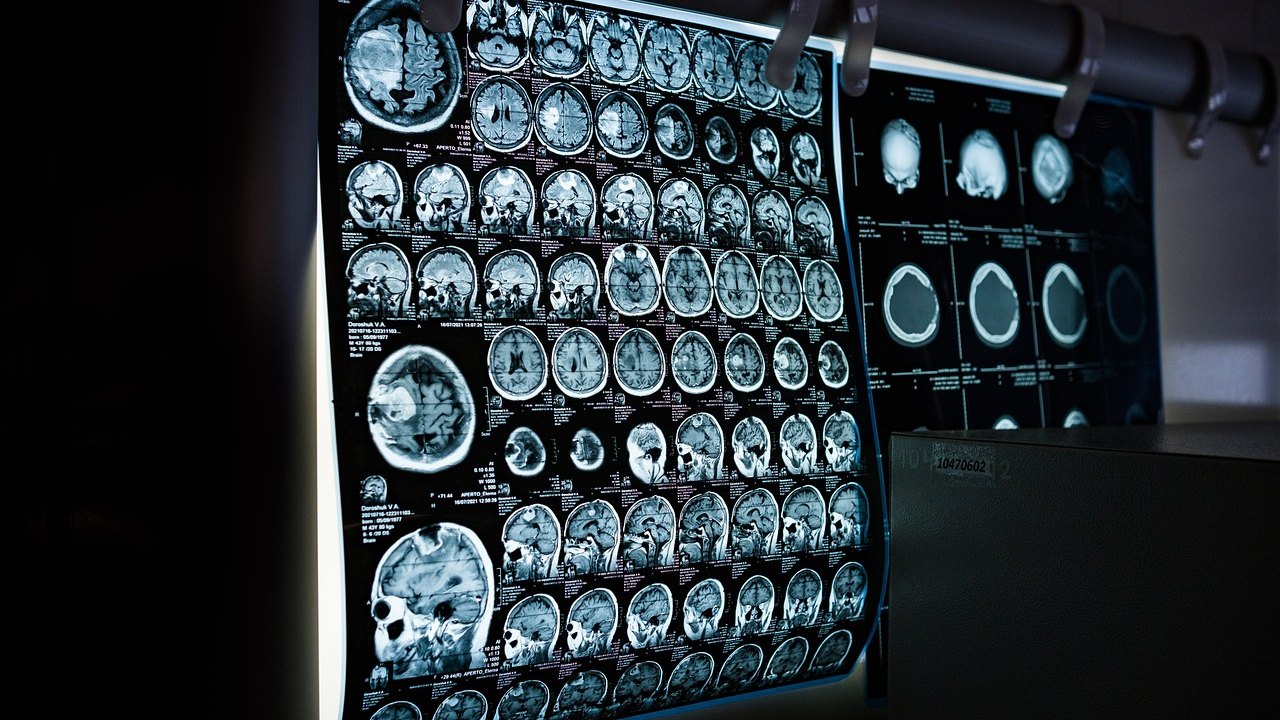
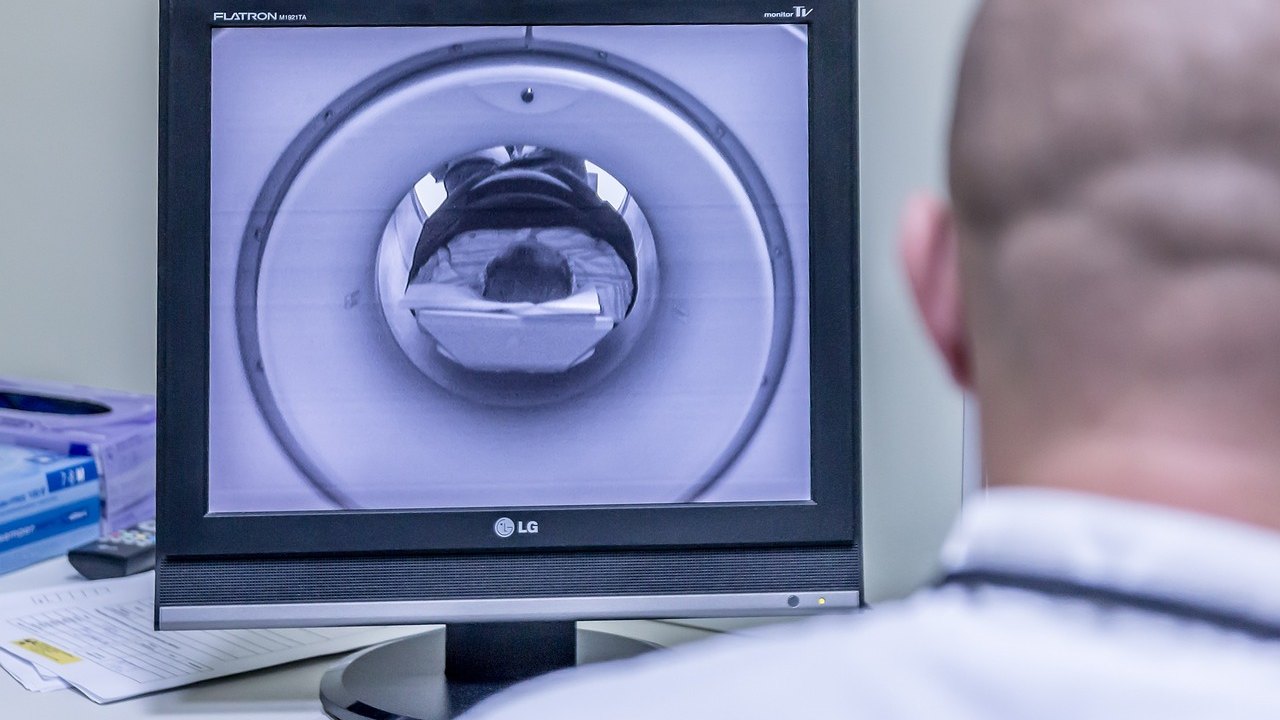
- MRI guided the targeting. Ultrasound was applied for 10 minutes in 30-second on-off cycles.
- Symptoms were assessed before, during, and up to seven days after each session, using rating scales for delusions, hallucinations, thinking and memory, and side effects.
Delusion scores fell by an average of 1.2 points on a standard clinical scale after the real session. After the sham session they rose by an average of 0.4 points. The difference persisted for as long as a week, which was the end of the study period. Side effects included fatigue, headache, and brief increases in psychotic symptoms. All were mild and short-lived, and they did not differ between real and sham treatment.
Why it matters
Delusions and hallucinations are the hallmark positive symptoms of psychotic disorders. Many patients still have symptoms despite medication, and current drugs act mainly through dopamine D2 receptor blockade, with well-known side effects. A noninvasive method that can reach deep circuits without surgery is therefore of real interest.
Deep brain stimulation can reach the GPi, but it requires implanted electrodes. Ultrasound could in principle reach similar depths through the intact skull. Experts have already explored TUS for anxiety, depression, and obsessive-compulsive disorder, and for thinking and memory in Alzheimer's and Parkinson's diseases. The senior author, Donald Goff, also noted that focused ultrasound can be used to examine which brain circuits matter in psychiatric illness, a research value apart from any treatment role.
The authors say further work is needed to establish whether targeted ultrasound could one day supplement or even replace standard medicines. That is a stated aspiration, not a result.
What to know for the USMLE — high-yield
- Schizophrenia diagnosis: two or more of delusions, hallucinations, disorganized speech, grossly disorganized or catatonic behavior, and negative symptoms. At least one must be delusions, hallucinations, or disorganized speech. Total duration is at least 6 months, with at least 1 month of active symptoms. Under 1 month is brief psychotic disorder; 1 to 6 months is schizophreniform disorder.
- Schizoaffective disorder: a major mood episode (depressive or manic) concurrent with schizophrenia-type symptoms, plus at least 2 weeks of delusions or hallucinations without a prominent mood episode. This is the key distinction from a mood disorder with psychotic features.
- Positive symptoms: delusions, hallucinations, disorganized speech and behavior. Negative symptoms: flat affect, alogia, avolition, anhedonia, social withdrawal. Negative symptoms respond poorly to typical antipsychotics.
- Dopamine hypothesis: excess activity in the mesolimbic pathway is linked to positive symptoms. Reduced activity in the mesocortical pathway is linked to negative and cognitive symptoms. Blocking D2 in the nigrostriatal pathway causes extrapyramidal symptoms. Blocking D2 in the tuberoinfundibular pathway causes hyperprolactinemia. Glutamate (NMDA receptor hypofunction) and serotonin are also implicated.
- Basal ganglia anatomy: the GPi, together with the substantia nigra pars reticulata, is a main output nucleus. It sends inhibitory GABAergic projections to the thalamus. The direct pathway (D1) inhibits the GPi, which disinhibits the thalamus and promotes movement. The indirect pathway (D2) does the opposite. GPi deep brain stimulation is used in Parkinson disease and dystonia.
- Antipsychotic pharmacology:
- First-generation (haloperidol, chlorpromazine) are D2 blockers. Their adverse effects are acute dystonia, parkinsonism, akathisia, tardive dyskinesia, and neuroleptic malignant syndrome.
- Second-generation drugs add serotonin 5-HT2A antagonism. Examples: risperidone (hyperprolactinemia), olanzapine (weight gain, metabolic syndrome), quetiapine (sedation), and ziprasidone (QT prolongation).
- Clozapine is reserved for refractory illness. Watch for agranulocytosis (monitor the ANC), seizures, myocarditis, and sialorrhea.
- Study-design vocabulary: this study was randomized, sham-controlled, crossover, and blinded for participants and raters. Know why a sham arm and blinding reduce placebo effect and observer bias, and why a crossover design lets each patient serve as their own control.
- Ultrasound physics (basic): ultrasound is a mechanical pressure wave above the range of human hearing. Therapeutic focused ultrasound differs from diagnostic imaging in its purpose and how the energy is delivered. The exact mechanisms by which it changes neuronal activity are still under study.

Limitations
- Very small sample. Ten participants cannot establish efficacy or detect uncommon adverse events, and results from tiny samples often shrink in larger trials.
- Pilot study. It was designed to test feasibility and early safety. The authors call the findings early evidence.
- Single session, short follow-up. The benefit was seen for up to seven days, so durability beyond a week is unknown. Repeated sessions over longer periods have not yet been tested.
- Modest effect. The average change was 1.2 points on a clinical scale. Whether that is meaningful for daily functioning cannot be judged from the available summary.
- Selected population. Participants had persistent symptoms despite drug treatment. The findings may not apply to patients who respond well to medication or to first-episode psychosis.
- Targeting is unconfirmed. Future studies plan to use advanced brain imaging to confirm that the GPi is being hit and to tailor intensity to each person. This implies targeting accuracy and dosing are still being refined.
- Mild but real adverse effects. Brief increases in psychotic symptoms occurred, though not more often than with sham.
FAQ
Can ultrasound treat schizophrenia right now?
No. This was a 10-person pilot, and the researchers say larger and longer studies are needed. They plan to test more patients and repeated sessions.
Which brain region was targeted, and why?
The globus pallidus internus, part of a circuit involved in controlling movement, thought, and emotion. The team's earlier work linked problems in this circuit to delusions and to how well patients responded to medication.
Could ultrasound replace antipsychotics?
That is unknown. The senior author said more work is needed to establish whether it could supplement or even replace standard medicines. For exam purposes, antipsychotics and D2 blockade remain the established pharmacologic framework.
Key takeaways
- In a randomized, sham-controlled, blinded crossover pilot of 10 people with schizophrenia or schizoaffective disorder, one 10-minute ultrasound session aimed at the right GPi lowered delusion scores by 1.2 points on average, versus a 0.4-point rise with sham. The difference lasted up to a week.
- Side effects were mild, short-lived, and similar between real and sham sessions, but the sample is too small and the follow-up too short to draw clinical conclusions.
- For USMLE, tie the story to the dopamine hypothesis, positive versus negative symptoms, the diagnostic criteria for schizophrenia versus schizoaffective disorder, and basal ganglia circuitry with the GPi as a GABAergic output nucleus.
Prepared by the project team from the source material. Not medical advice.