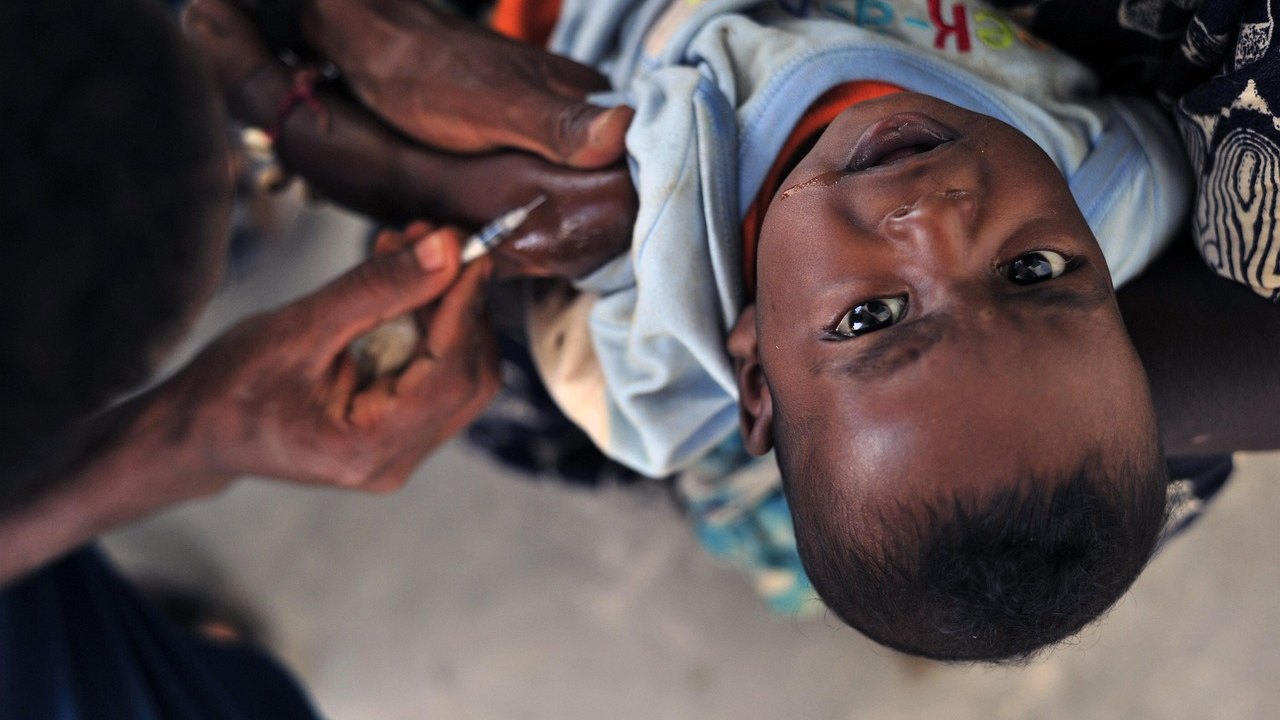
Measles Resurgence: GBD 2023 Data and USMLE High-Yield Facts
A new Global Burden of Disease (GBD) 2023 analysis in Nature Medicine reports that measles incidence and mortality in children under 5 fell steeply from 1990 to 2019 but rebounded sharply after 2020. The authors estimate 15.6 million cases and 118,000 deaths in 2023, and they link the rebound to stalled vaccine coverage. For USMLE learners, it is a good reason to review measles clinical features, the MMR vaccine, and herd immunity.
What happened
The study used the GBD 2023 framework to assess measles incidence, mortality, disability-adjusted life years (DALYs), and vaccine coverage in children under 5 years of age. It covered 204 countries and territories from 1990 to 2023. Coverage was tracked for the first and second doses of measles-containing vaccine (MCV1 and MCV2).
Key figures from the abstract:
- 1990–2019: Global measles incidence fell by about 80% and mortality by about 90%.
- 2019–2023: Estimated cases rose by about 40% and deaths by about 12%, reaching 15.6 million cases and 118,000 deaths in 2023.
- Geography: Sub-Saharan Africa and South Asia continue to carry the highest burden.
- MCV1 coverage: It rose from 67.2% in 1990 to 83.6% in 2019, then stalled and declined slightly to 81.0% by 2023.
- MCV2 coverage: It rose from 14.4% in 1990 to 68.4% in 2019 and reached 71.4% by 2023.
- Target gap: Several regions remain well below the Immunization Agenda 2030 (IA2030) target of 90% coverage.
The authors conclude that the resurgence shows how fragile global immunization progress is. They call for restoring routine vaccination, closing immunity gaps, and strengthening outbreak preparedness.

Why it matters
Measles is among the most contagious human infections, so even small drops in vaccine coverage can show up quickly as outbreaks. The pattern in this analysis fits that expectation. Coverage plateaued and slipped slightly for the first dose, and the burden went up again.
The paper's data are for children under 5, the group in which measles is most dangerous. It also reminds us that second-dose coverage (71.4% in 2023) is still well below first-dose coverage. A single dose does not give the immunity level needed to block sustained transmission.
For the USMLE, this is more than a headline. Questions on measles often combine a clinical vignette with a public health twist, such as an unvaccinated child, a school outbreak, or exposure in a waiting room. Knowing why coverage thresholds matter is part of the same skill set as recognizing Koplik spots.
What to know for the USMLE — high-yield measles review
- Pathogen: Measles (rubeola) virus is an enveloped, negative-sense, single-stranded RNA virus in the Paramyxoviridae family (genus Morbillivirus). Its hemagglutinin (H) protein mediates attachment and its fusion (F) protein causes cell fusion. Receptors include SLAM (CD150) and nectin-4.
- Transmission: It spreads by the airborne route and is highly contagious. Hospitalized patients need airborne precautions in a negative-pressure room.
- Prodrome, the 3 Cs: Cough, coryza, conjunctivitis, with high fever.
- Koplik spots: These are small white-blue spots on a red base on the buccal mucosa. They are pathognomonic and appear before the rash.
- Rash: A maculopapular rash starts on the face and hairline and spreads cephalocaudally. The lesions can become confluent.
- Complications:
- Pneumonia is the most common cause of measles-related death. Histology shows multinucleated Warthin-Finkeldey giant cells.
- Others include otitis media, croup, diarrhea, and acute encephalitis.
- Transient immune suppression after infection increases the risk of secondary infections.
- Subacute sclerosing panencephalitis (SSPE) is a rare, fatal, late neurologic complication that appears years after infection. It causes progressive cognitive decline, myoclonus, and seizures.
- Vitamin A: Textbooks and WHO guidance include vitamin A supplementation for children with measles, because deficiency is linked to worse outcomes.
- Vaccine: MMR is a live attenuated vaccine. The standard US schedule is two doses, at 12–15 months and 4–6 years. It is contraindicated in pregnancy and in severe immunocompromise.
- Post-exposure prophylaxis: MMR within about 72 hours of exposure, or immunoglobulin within about 6 days for those who cannot receive the vaccine, such as infants, pregnant women, and severely immunocompromised patients.
- Herd immunity: Measles has a very high basic reproduction number (R0 roughly 12–18). It therefore needs about 95% population immunity to interrupt transmission, higher than for most other vaccine-preventable diseases.
- Differential diagnosis: Rubella has postauricular lymphadenopathy and a milder course. Roseola has a rash that appears after the fever breaks. Kawasaki disease has fever for 5 or more days with non-exudative conjunctivitis. Scarlet fever has a sandpaper rash and strawberry tongue.
Limitations
- The numbers are modeled. GBD estimates are statistical model outputs, not direct counts. Where surveillance and vital registration are weak, estimates depend more heavily on modeling assumptions. Vaccine coverage is also estimated.
- Association, not proof of cause. The paper reports that coverage stalled while burden rose, and the authors attribute the resurgence to stagnating vaccination. A country-level trend analysis of this kind cannot show that coverage changes alone caused every increase.
- Under-5 focus. The analysis covers children under 5. It does not describe measles in older children or adults, who can be a large share of cases in some outbreaks.
- Estimates differ across sources. The paper's reference list cites a WHO report of 10.3 million measles cases in 2023. Other sources and methods give different totals, so treat any single figure as an estimate.
- Abstract only. The full article is behind a subscription. This summary relies on the abstract and the accompanying data statements, so we cannot comment on detailed regional or country-level results. The abstract also does not include pertussis data, so this article does not discuss it.
FAQ
Is measles really coming back, according to this study?
Yes, by these estimates. GBD 2023 shows that global incidence and mortality in children under 5 fell by about 80% and 90% between 1990 and 2019. Estimated cases rose about 40% and deaths about 12% from 2019 to 2023.
What are the classic measles findings on the USMLE?
The classic findings are the three Cs (cough, coryza, conjunctivitis), fever, Koplik spots, and a rash that spreads from head to toe. Pneumonia is the most common fatal complication, and SSPE is a rare late neurologic one.
Why does measles need such high vaccination coverage?
Measles is extremely contagious, with an R0 of roughly 12–18. About 95% immunity is needed to stop transmission, so even modest coverage gaps can allow outbreaks. The GBD figures of 81.0% for MCV1 and 71.4% for MCV2 in 2023 sit below the IA2030 target of 90%.
Key takeaways
- GBD 2023 estimates that measles incidence and mortality in children under 5 fell from 1990 to 2019, then rose, reaching 15.6 million cases and 118,000 deaths in 2023.
- MCV1 coverage stalled and slipped to 81.0% by 2023, and MCV2 reached 71.4%. Several regions remain well below the 90% IA2030 target.
- For USMLE, know the 3 Cs, Koplik spots, pneumonia and SSPE complications, the live MMR vaccine, and why about 95% immunity is needed for herd protection. Remember that GBD figures are modeled estimates.
Prepared by the project team from the source material. Not medical advice.