IBD Antibody Markers 10 Years Before Diagnosis (USMLE)
Researchers presenting at UEG Week 2026 report that distinct antibody patterns in blood can be detected up to 10 years before a diagnosis of Crohn's disease (CD) or ulcerative colitis (UC). Machine-learning models built on these patterns separated future IBD cases from healthy controls, and also helped identify people who would later develop complicated Crohn's disease. The authors stress that this is a proof of principle, not a screening test.
What happened
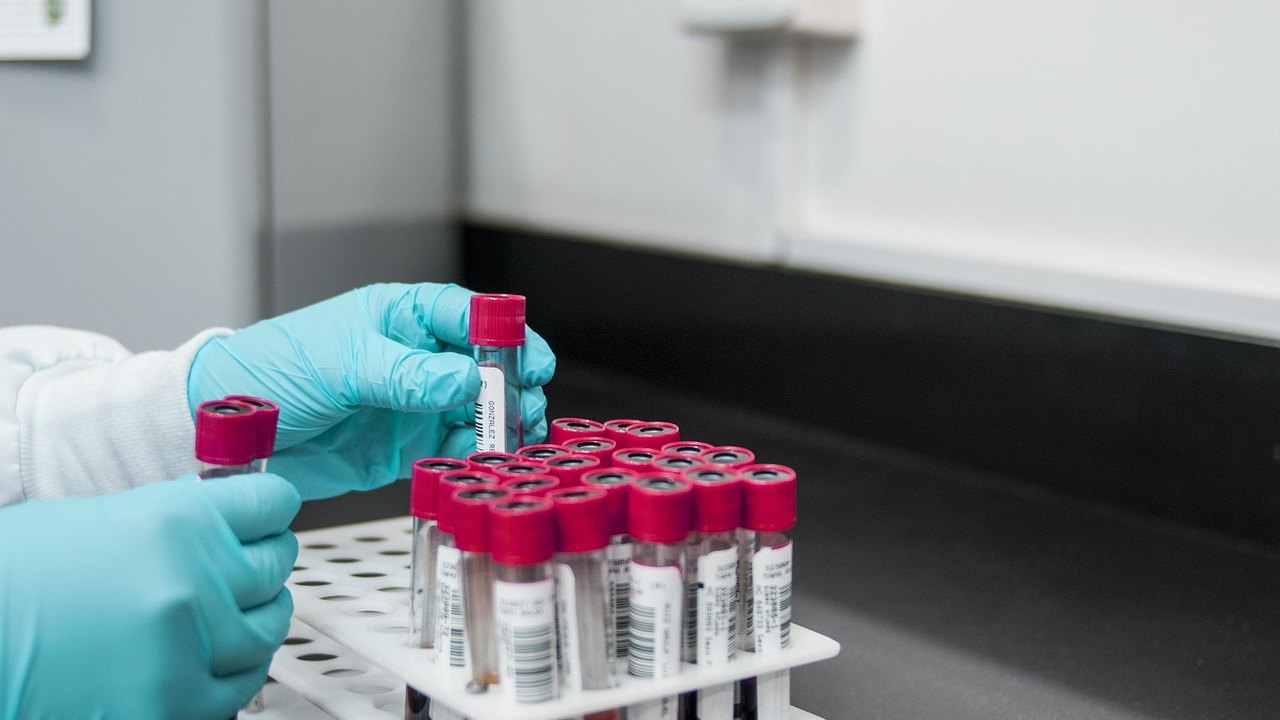
The team studied 2,000 serum samples from 500 people: 200 who eventually developed Crohn's disease, 200 who developed ulcerative colitis, and 100 healthy individuals of comparable age and sex. For each person, samples were available from the time of diagnosis and from roughly 2, 4, and 10 years earlier. That design let the researchers look backward through a decade of immune activity.
They measured antibody reactivity against about 357,000 antigens from bacteria, viruses, food, and the body's own proteins (autoantigens). Across all samples they detected 123,980 unique antibodies.
The main findings:
- Reduced antibody diversity. People who later developed CD or UC had significantly less antibody diversity than healthy participants. Changes were detectable in both diseases as far back as 10 years before diagnosis.
- Crohn's disease signature. Antibody responses to herpesviruses and bacterial flagellin were elevated. This was most noticeable in people who later developed complicated CD or ileal disease. Responses to encapsulated bacteria gradually fell as diagnosis approached.
- Ulcerative colitis signature. Responses to herpesviruses and autoantigens rose, while responses to encapsulated pathogens declined.
- Prediction. Using antibody patterns from up to 10 years before diagnosis, the models distinguished future CD from controls with an AUC of 0.90 and future UC from controls with an AUC of 0.84. Complicated versus less complicated CD was separated about 10 years before diagnosis with an AUC of 0.85.
Why it matters
Researchers increasingly believe IBD starts years before diagnosis, but the immune changes in that silent phase have been poorly understood. This study suggests the changes are measurable and differ between CD and UC.
Lead author Dr. Arno Bourgonje noted that the antibody profile of complicated CD is present years before the first symptoms. In his words, it is "not simply the consequence of disease progression after diagnosis." That points toward a possible role for antibody profiling in earlier risk detection, subtype discrimination, and identifying patients who might benefit from more intensive therapy.
For now, this is a research signal. It does not change how IBD is diagnosed or managed today.
What to know for the USMLE: Crohn's disease vs ulcerative colitis
This news is a good hook for reviewing IBD, a staple of both Step 1 and Step 2 CK. High-yield points from standard textbook knowledge:
- Crohn's disease: can affect any part of the GI tract from mouth to anus, most classically the terminal ileum. Look for skip lesions, transmural inflammation, noncaseating granulomas, a cobblestone mucosa, and "creeping fat." Complications include strictures (the "string sign" on imaging), fistulas, and abscesses.
- Ulcerative colitis: involves the rectum and extends proximally in a continuous pattern. Inflammation is limited to the mucosa and submucosa, with crypt abscesses, and a "lead pipe" colon on imaging in chronic disease. It classically presents with bloody diarrhea.
- Serologic markers: ASCA (anti-Saccharomyces cerevisiae antibodies) is associated with Crohn's disease, while p-ANCA (perinuclear) is associated with ulcerative colitis. Anti-OmpC and anti-CBir1 (a flagellin antigen) are other antibodies linked to CD. This study did not report ASCA or p-ANCA specifically. It used a far broader antigen panel, so don't confuse the two on exam questions. These classic markers have limited sensitivity and specificity and are not used alone to diagnose IBD.
- Flagellin link: flagellin is a bacterial motility protein recognized by innate immunity (TLR5). The elevated flagellin responses in future CD fit the broader theory that CD involves an abnormal immune response to gut microbiota. NOD2 variants, which impair bacterial sensing, are a classic CD genetic association.
- Encapsulated bacteria: Streptococcus pneumoniae, Haemophilus influenzae type b, Neisseria meningitidis, Klebsiella pneumoniae, and others. Defense depends on opsonization and splenic clearance, and polysaccharide capsules are poorly immunogenic without conjugation. The falling antibody responses in this study are an observation, and the source does not explain the mechanism.
- Extraintestinal and complication associations:
- UC: primary sclerosing cholangitis, toxic megacolon, and higher colorectal cancer risk with long-standing disease.
- CD: vitamin B12 deficiency and bile-acid malabsorption with ileal disease, calcium oxalate kidney stones, and gallstones.
- Both: arthritis, uveitis, erythema nodosum, and pyoderma gangrenosum.
- Risk modifiers: smoking increases CD risk and is generally associated with lower UC risk.
- Herpesviruses: this study found changes in antibody responses to herpesviruses, but it does not show that they cause IBD. Separately, CMV superinfection is a known consideration in steroid-refractory UC flares.
- Test-statistics tie-in: AUC summarizes how well a test discriminates between two groups. 0.5 is chance and 1.0 is perfect. Remember that AUC does not tell you predictive value in a low-prevalence population, which is exactly the setting in which screening would be used.

Limitations
The authors are open about the constraints, and you should be too when you think critically about this kind of study, as USMLE biostatistics questions expect.
- Not a screening test. The researchers say the findings are not ready for routine screening.
- Proof of principle. The source material describes the study as establishing proof of principle. Whether the patterns reliably predict disease in broader populations is unknown.
- Needs independent validation. The authors' stated next priority is validation in independent, more diverse, prospectively followed populations. The source does not describe such validation as already done.
- Unknown added value. It is not yet clear whether antibody testing adds meaningful information beyond genetic data, clinical assessment, and other blood markers.
- Practical hurdles. A real test would need to be accurate, affordable, and reproducible. It would also have to be shown to improve patient outcomes, not just predict disease.
- Case-control design. The comparison was between people who later developed IBD and healthy controls. Real-world screening would involve distinguishing future IBD from many other conditions, a harder task.
- Association, not causation. Reduced antibody diversity and altered responses to herpesviruses or flagellin are associations. The study does not show these changes cause IBD.
- Conference presentation. The results were presented at UEG Week 2026, and the source material does not detail peer-reviewed publication.
FAQ
Can a blood test predict Crohn's disease or ulcerative colitis 10 years early?
Not in clinical practice. In this study, antibody patterns from up to 10 years before diagnosis distinguished future CD (AUC 0.90) and UC (AUC 0.84) from healthy controls. The authors say the results are not ready for routine screening and need validation.
Are ASCA and p-ANCA the antibodies found in this study?
The source material does not mention them. The researchers screened antibody reactivity against about 357,000 antigens and reported broader patterns, such as responses to herpesviruses, flagellin, encapsulated bacteria, and autoantigens. For the USMLE, ASCA is still linked to Crohn's disease and p-ANCA to ulcerative colitis.
What does an AUC of 0.90 mean?
AUC measures how well a model distinguishes two groups, with 0.5 equal to chance and 1.0 equal to perfect discrimination. An AUC of 0.90 indicates strong discrimination in that dataset. It does not by itself tell you how the test would perform in the general population.
Key takeaways
- A study of 2,000 serum samples from 500 people found antibody changes, including reduced diversity, up to 10 years before Crohn's disease or ulcerative colitis was diagnosed. The patterns differed between the two diseases.
- Machine-learning models gave AUCs of 0.90 (CD vs controls), 0.84 (UC vs controls), and 0.85 (complicated vs less complicated CD). These are promising, but the work is a proof of principle that still needs independent, prospective validation.
- For the USMLE, focus on the fundamentals: Crohn's (skip lesions, transmural, terminal ileum, ASCA) versus UC (continuous from the rectum, mucosal, p-ANCA, PSC, colorectal cancer risk).
Prepared by the project team from the source material. Not medical advice.